In recent years, artificial intelligence has become one of the fastest-growing industries in the world. From chatbots to autonomous systems, the demand for computing power is skyrocketing.
But behind this technological revolution, there is a lesser-known consequence:
Water consumption.
💧 Data Centers: The Invisible Consumers of Water
Every time you use AI, stream a video, or store data in the cloud, you are relying on data centers — massive facilities filled with servers that process and store information.
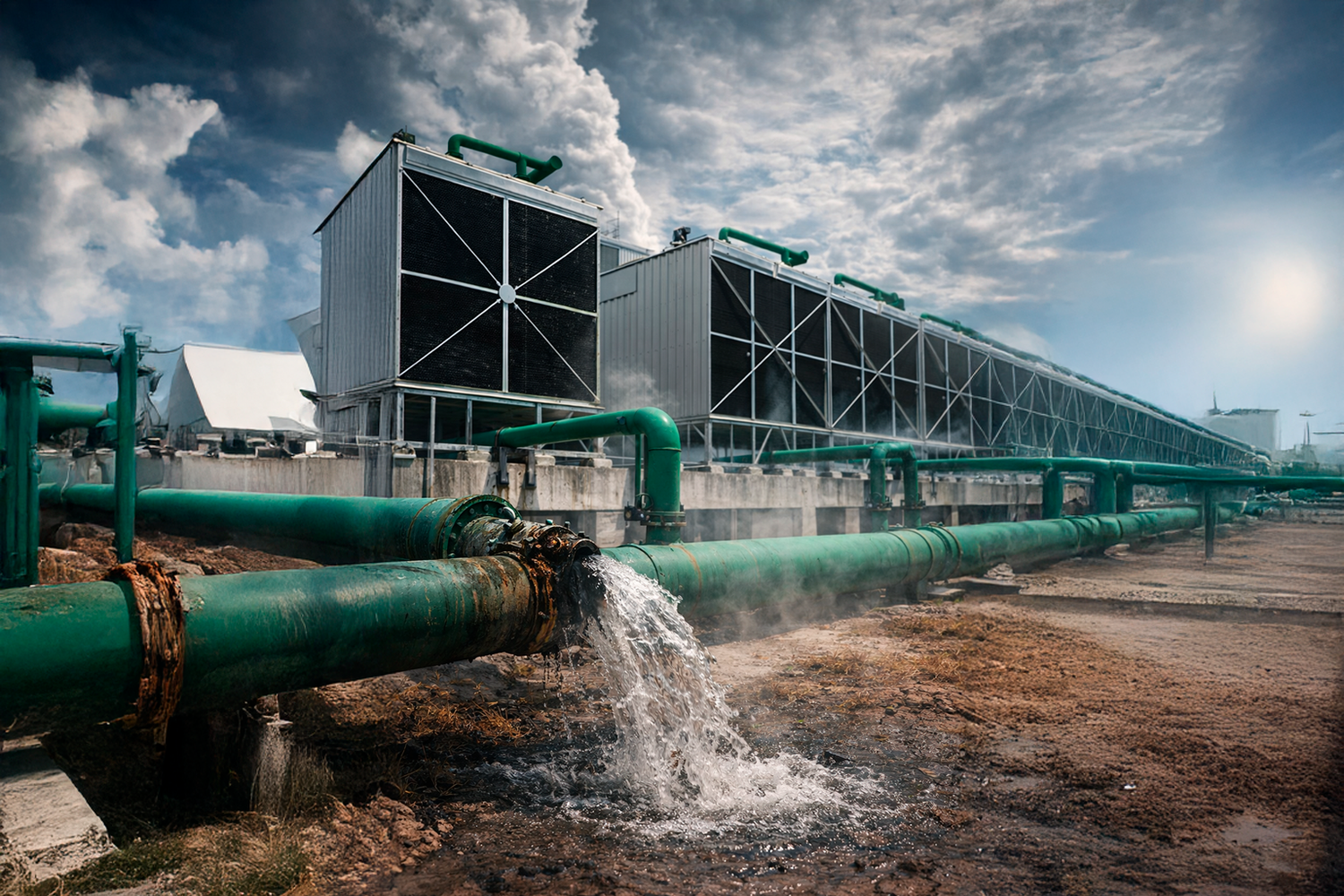
What many people don’t realize is that these servers generate enormous amounts of heat.
To keep them running, data centers require cooling systems — and many of those systems depend heavily on water.
Some estimates suggest that a single large data center can consume millions of liters of water per day for cooling purposes.
As AI continues to expand, so does the infrastructure behind it.
And with it, the demand for water.
🌎 A Growing Demand in a Finite System
Water is not an infinite resource.
In many regions of the world — including parts of the United States — water systems are already under pressure due to:
- Population growth
- Climate variability
- Aging infrastructure
Now, a new variable is entering the equation:
industrial-scale water consumption driven by digital infrastructure.
While this demand is not always visible, it is real — and it is growing.
⚠️ What Happens When Demand Increases?
In any system, when demand rises, availability becomes more uncertain.
This doesn’t necessarily mean immediate shortages.
But it does mean that:
- Prices can increase
- Access can become less predictable
- Dependence on centralized systems becomes a risk factor
For those paying attention, this raises an important question:
How secure is your access to clean water?
🧠 A Shift in Mindset: From Access to Control
Traditionally, water has been something we access — through infrastructure, delivery systems, or distribution networks.
But as systems become more complex and demand continues to grow, a new mindset is emerging:
Water security is no longer just about access.
It’s about control.
This is why more people are beginning to explore alternatives that allow them to reduce dependence on external systems.
💡 The Rise of Independent Water Solutions
Technologies such as atmospheric water generation are gaining attention as a way to produce water directly from the air.
By extracting humidity and converting it into clean, drinkable water, these systems offer a different approach:
- No reliance on pipelines
- No dependence on bottled water supply chains
- No need for external water sources
While not a replacement for all water needs, they represent a shift toward self-sufficiency and resilience.
🔍 Looking Ahead
The growth of AI and digital infrastructure is unlikely to slow down.
And neither is the demand for water that comes with it.
This doesn’t mean crisis is inevitable.
But it does highlight a reality:
The systems we depend on are evolving — and so are the pressures on them.
🌱 Final Thought
In a world where demand continues to rise, one principle becomes increasingly relevant:
The most reliable water source is the one you can produce yourself.