
noun
The point of origin of a supply. In water resilience, having one is not enough — because every source has a condition under which it stops working.
Every water source has a failure point.
A resilient home plans for all of them.
In homesteading and preparedness communities, there's a version of this conversation that comes up constantly: "We have a well, so we're covered." Or: "We store rainwater, that's our backup." Or simply: "We always keep bottled water."
Each of those is a starting point. None of them is a plan.
The problem isn't the source — it's the assumption that one source, working correctly under normal conditions, is the same as a system that functions when conditions change. It isn't. And the gap between those two things is exactly where water resilience lives.
But there's something else the homesteading community has started to understand that goes beyond failure points: having a source is not the same as having safe water. A well can be running and still be delivering arsenic. A rainwater tank can be full and still be growing bacteria that will make your family sick. The question isn't just where does the water come from — it's what happens to it between the source and your glass.
The four sources — and what most people miss about each one
Municipal water supply
The most common primary source — and the most invisible dependency
Municipal water is the default for most households. It's treated, monitored, and — when the system works — reliable. The EPA mandates that public water utilities meet strict safety standards and monitor over 90 contaminants. But that mandate covers the utility, not your home.
What most people don't account for: municipal systems are infrastructure. They depend on power, pumping stations, treatment facilities, and a supply chain of chemicals. Storms, earthquakes, cyberattacks on utility systems, and aging pipes are among the documented failure modes — and when they fail, they often fail without warning.
Boil water notices — official advisories issued when municipal water becomes unsafe to drink — affected millions of Americans in 2023 alone. They don't always come before exposure.
Well water
The homesteader's default — with two problems most owners haven't addressed
Wells are one of the most common backup strategies in homesteading — and for good reason. A well gives you independence from municipal infrastructure. Until the power goes out.
Most well pumps are electric. No grid power means no water, regardless of how full the aquifer is. This is the failure mode most well owners know about but haven't solved with backup power.
The second problem is less visible and more dangerous: contamination. The USGS reports that more than 1 in 5 private wells in the U.S. contain at least one contaminant — arsenic, uranium, or manganese — above health-based guidelines, most of them from natural geological sources. The majority of well owners have never had their water tested.
A well pump running on backup power is still delivering contaminated water if the aquifer is compromised. Running water and safe water are not the same thing.
Rainwater harvesting
The most self-sufficient option — and the most misunderstood one
Rainwater harvesting is one of the most discussed topics in homesteading forums — and the one with the most dangerous misconceptions. The most common: that collected rainwater is naturally clean because it came from the sky.
It isn't. Collected rainwater passes over roofing surfaces that accumulate bird droppings, pollen, lead particles from old paint, and atmospheric pollutants before reaching your tank. A 2022 study by Stockholm University and ETH Zurich found that rainwater in every region of the world now contains PFAS — "forever chemicals" — at levels exceeding U.S. EPA health guidelines. From Antarctica to the Tibetan Plateau. There is no region exempt.
Inside the tank, a different set of problems begins. Algae growth starts within days when a translucent container is exposed to sunlight. Mosquitoes breed in open or poorly sealed tanks. Cyanobacteria — commonly called blue-green algae — can produce toxins harmful to humans and animals. Stagnant, warm, light-exposed water is ideal for all of them.
The homesteading community has developed solid practices for this — first-flush diverters that discard the most contaminated initial flow, opaque tanks that block light, sealed lids, sediment pre-filters, and periodic treatment with food-safe amounts of bleach or UV systems. But these are practices that require active management, not a one-time installation.
Stored bottled water & delivery
The easiest solution — and the one that fails first
Bottled water and delivery services feel like the simplest answer to water preparedness. They require no infrastructure, no maintenance, and no testing. But they come with hard limits that reveal themselves exactly when you need them most.
A family of four drinking and cooking at minimum consumption burns through 3–4 gallons per day. A typical emergency stockpile of 24 one-liter bottles — what most preparedness guides call a "starter kit" — lasts about 36 hours. Hygiene, pets, and cooking push that ceiling down, not up.
Bottled water sells out in grocery stores before storms make landfall — a pattern documented in every major hurricane season on record. Delivery services are among the first supply chains disrupted during regional emergencies, when roads close, drivers can't operate, and distribution centers run dry.
There's also a shelf life consideration that most people don't track: commercially bottled water doesn't expire, but the containers do. Plastic leaches into the water over time, especially in heat. Bottles stored in garages or vehicles in warm climates should be rotated every 6–12 months.
Source: U.S. EPA / USGS National Water Quality Assessment, 2023
The problem beneath the problem
Every source type has a failure mode. But they share a deeper problem that doesn't get discussed enough in homesteading communities: water safety is not binary.
Water is not simply "safe" or "unsafe." It exists on a spectrum — and moving down that spectrum can happen slowly, invisibly, and without any change in how the water looks, smells, or tastes. Arsenic from geological sources has no odor. PFAS have no color. Early-stage bacterial growth in a storage tank doesn't change the appearance of the water. Giardia cysts in a rainwater catchment are microscopic.
This is what the experienced homesteading community has learned — often the hard way, through illness, through contaminated tanks, through failed filtration systems. The forums reflect it: the conversations aren't just about having a source. They're about maintaining a source. Managing storage. Testing regularly. Treating consistently.
What a real plan looks like
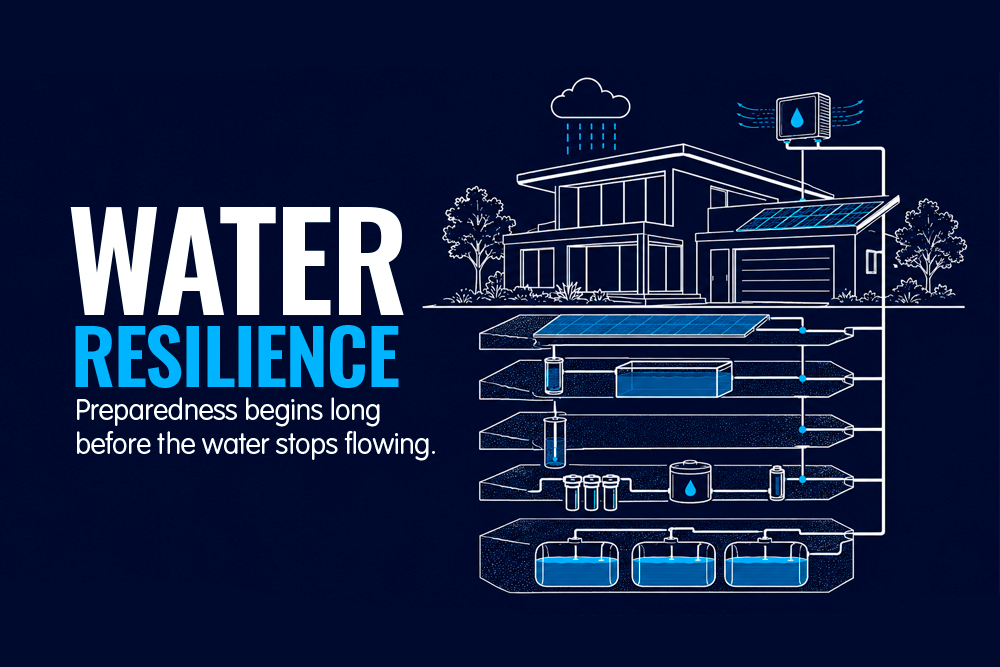
A resilient water plan doesn't pick one source and rely on it. It treats each source as one layer of a system — and it accounts for what happens to the water at every stage, not just where it comes from.
Know your source — really know it
Test well water annually. Understand what your municipal report actually says. Know your rainwater collection surface and what's accumulated on it. You can't manage what you haven't measured.
Treat before you store
Collected water — from rain, from uncertain municipal sources, from surface catchments — should be treated before entering long-term storage. The WHO's Water Safety Plan framework recommends treatment at the point of collection, not just at the point of use.
Store correctly
Opaque containers. Sealed lids. Cool, dark location. Rotation schedule every 6 months for treated stored water. No cross-connections between treated and untreated sources. These aren't optional — they're what keeps stored water safe over time.
Filter at the point of use
A final treatment stage — ceramic filter, UV sterilizer, activated carbon — before consumption adds a last line of defense for pathogens and chemical residues that storage and primary treatment may not fully address.
Secure the energy
Any water system that depends on electricity — well pumps, UV sterilizers, pressure tanks — needs a power backup. Without it, your system fails the moment the grid does, which is often the same moment you need it most.
Build in regeneration
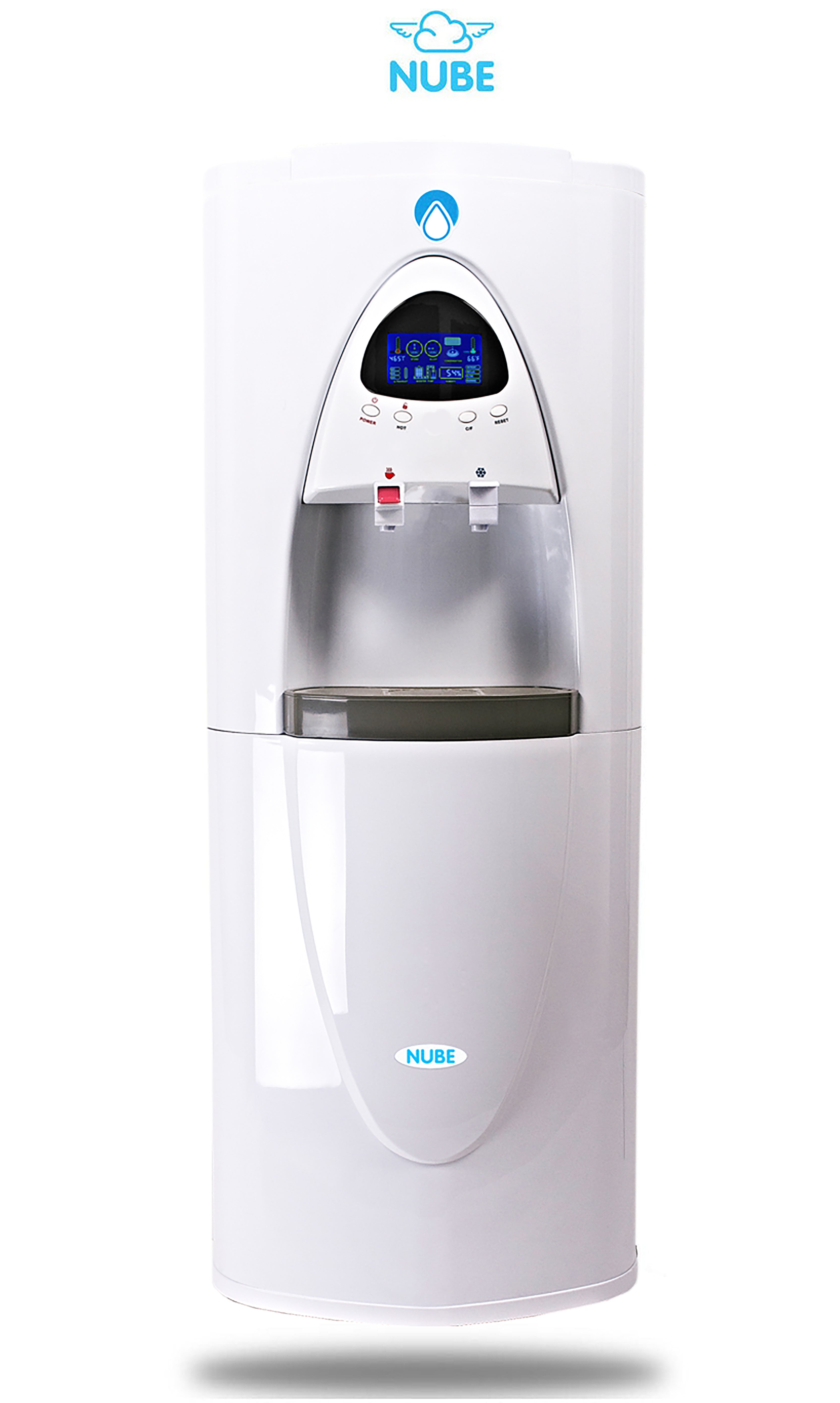
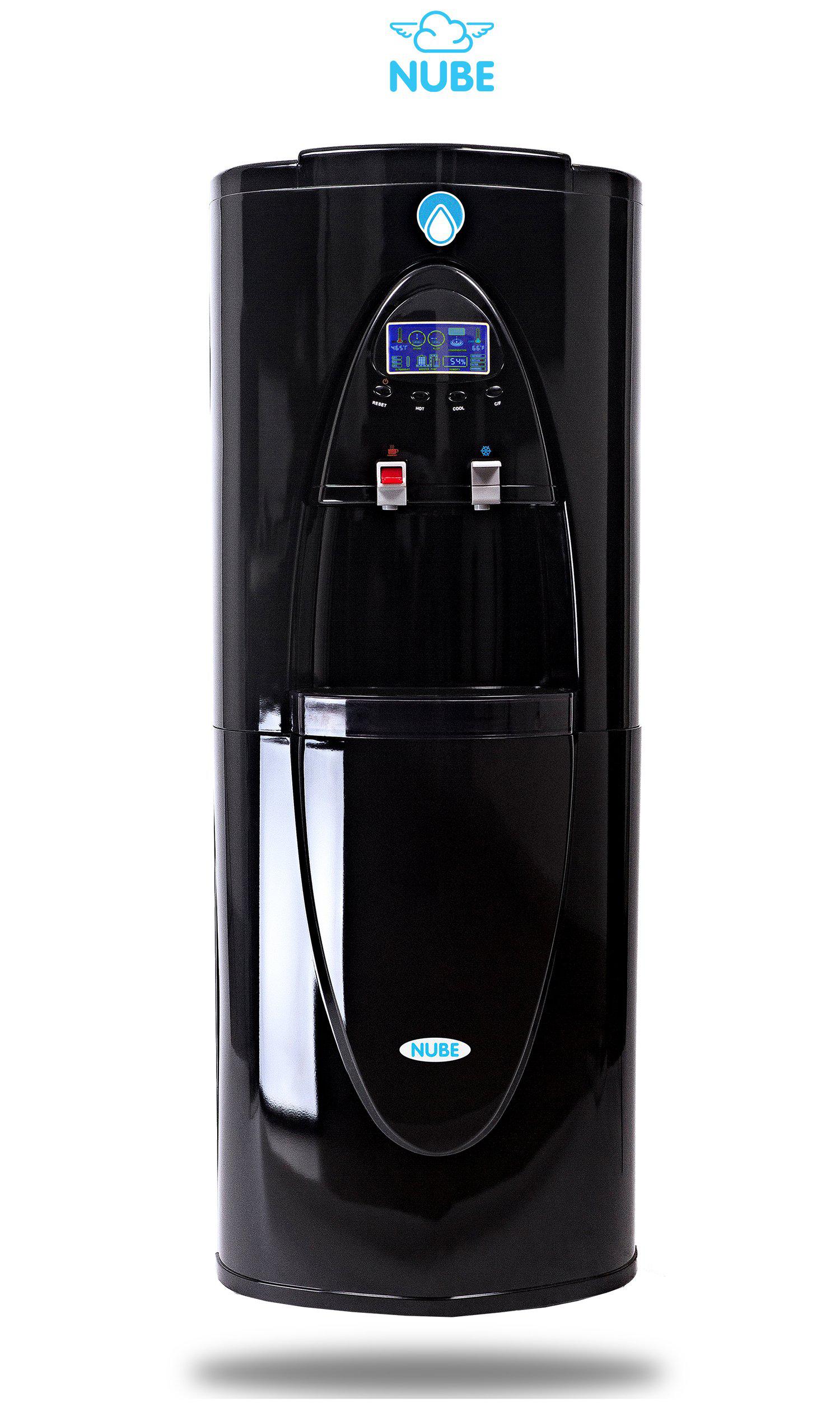
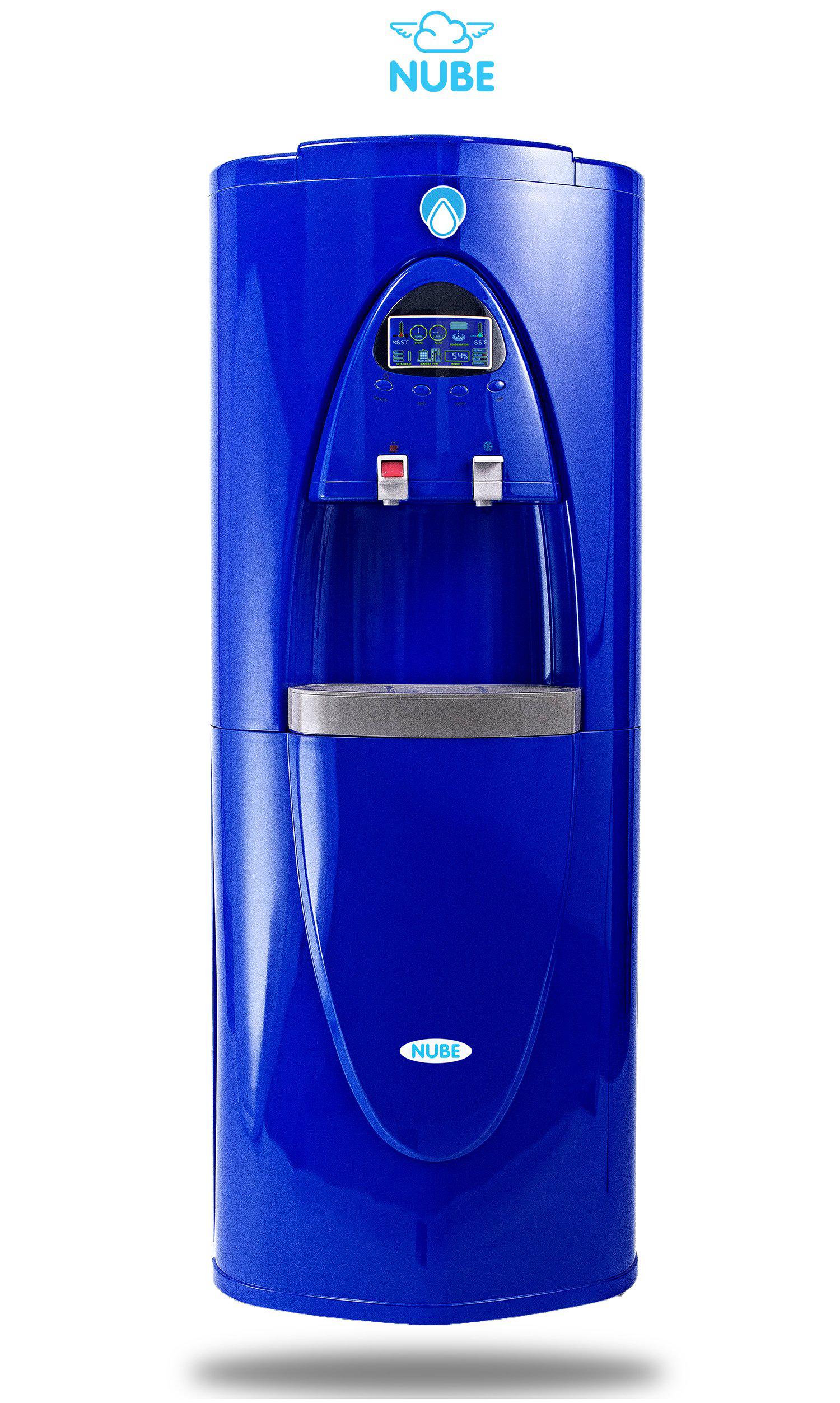
A truly resilient system doesn't just store water — it produces or replenishes it continuously. Rainwater catchment, a maintained well, or atmospheric water generation each offer this. Stored water alone will always have an expiration on your resilience.
The homesteading community is further ahead on this than most — but even experienced homesteaders often have one or two layers in place, not a complete system. The conversations in permaculture and preparedness forums show the same pattern: people learning through problems that could have been prevented with a more complete framework.
Water resilience is not about which source you choose.It's about what you do with it from collection to consumption — and what happens when that source is no longer available. Next: How to build a layered water plan for your home →
Sources
USGS (2022). Water Quality in Principal Aquifers of the United States — Private well contamination data. usgs.gov
Stockholm University / ETH Zurich (2022). Outside the Safe Operating Space of a New Planetary Boundary for Per- and Polyfluoroalkyl Substances. Environmental Science & Technology. pubs.acs.org
U.S. EPA / USGS (2023). PFAS detected in approximately 45% of U.S. drinking water samples. epa.gov/pfas
U.S. EPA (2024). National Primary Drinking Water Regulation for PFAS — Final Rule. epa.gov
CDC (2024). Collecting Rainwater and Your Health. cdc.gov
WHO (2017). Guidelines for Drinking-Water Quality, Fourth Edition — Water Safety Plans. ncbi.nlm.nih.gov
Permies.com community forums (2013–2024). Rainwater harvesting, potable water, algae management. permies.com
Water Quality and Health Council (2020). Is Rainwater Safe to Drink? waterandhealth.org



اترك تعليقا
جميع التعليقات تراجع قبل نشرها.
This site is protected by hCaptcha and the hCaptcha Privacy Policy and Terms of Service apply.