
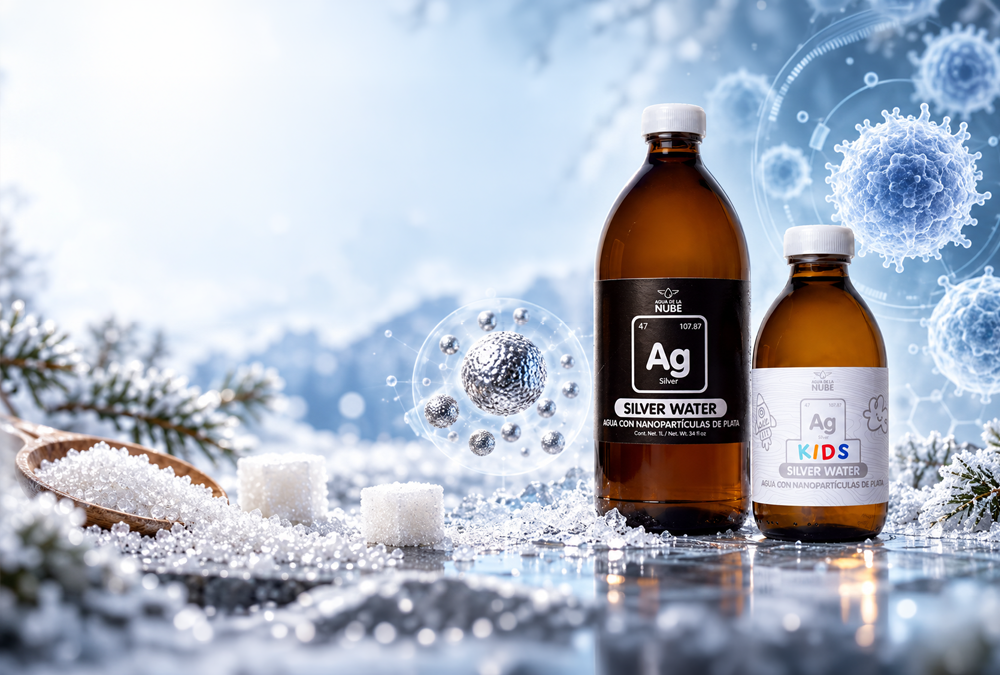
INNOVAQUA RESEARCH JOURNAL · FLU SEASON
Winter, Sugar & Silver Nanoparticles: What the Research Reveals
Shorter days can affect appetite and daily routines. Meanwhile, scientists are investigating how engineered silver nanoparticles interact with pathogens and immune cells. Here's what the evidence actually shows.
3 Research Highlights
- Sugar: A 1973 study observed reduced neutrophil activity after a large dose of certain sugars.
- Immune communication: A 2025 mouse study found changes in macrophage–NK cell signaling after experimental silver nanoparticle delivery.
- Influenza: A 2025 cell-culture study found inhibitory activity of silver nanoparticles against H1N1.
01. The Winter Sugar Effect
For some people, winter brings stronger cravings for carbohydrate-rich foods.
Research on winter-pattern seasonal affective disorder (SAD) has explored how shorter daylight hours, changes in mood-related biology, and appetite may be connected.
Serotonin helps regulate mood. Researchers have proposed that carbohydrate cravings may relate to serotonin signaling, although this is not established as a universal response to winter.
How Does Sugar Affect Immune Cells?
A human study published in The American Journal of Clinical Nutrition in 1973 examined how certain sugars affected neutrophils, a type of white blood cell.
RESEARCH SNAPSHOT · 1973
UP TO 5 HOURS
After consuming 100 grams of certain simple sugars, participants showed reduced neutrophil phagocytic activity, a measure of how white blood cells engulf bacteria and other particles.
The effect was observed over several hours. This does not mean that an ordinary sweet snack shuts down immunity for five hours.
READ THE STUDYMore recent research also associates persistently elevated blood glucose, particularly in poorly controlled diabetes, with impaired immune-cell function.
The distinction matters: sustained hyperglycemia is different from the temporary increase in glucose after an ordinary meal.
02. Silver: Beyond Antimicrobial Activity
Silver has a history of use in certain antimicrobial materials. Modern nanotechnology allows researchers to investigate how extremely small silver particles interact with biological systems.
One emerging research area is the relationship between silver nanoparticles and immune-cell communication.
A 2025 study published in Biomaterials investigated the pulmonary delivery of engineered silver nanoparticles in mice exposed to influenza.
BIOMATERIALS · 2025 · ANIMAL STUDY
Immune Cell Communication
Researchers observed:
- Changes in signaling between alveolar macrophages and natural killer (NK) cells.
- Greater recruitment of certain immune cells under experimental conditions.
- Lower viral loads in the lungs of some treated mice.
Why is this interesting? It suggests that certain engineered silver nanoparticles can influence how immune cells coordinate responses under specific experimental conditions.
These findings have not established immune enhancement or influenza protection in humans.
EXPLORE THE RESEARCH03. Silver Nanoparticles Against Influenza A/H1N1
A separate study published in BMC Research Notes in February 2025 investigated silver nanoparticles against influenza A/H1N1 in laboratory-grown cells.
Researchers observed reductions in viral activity under certain experimental conditions.
The results depended on factors such as nanoparticle concentration and the timing of exposure.
The finding: Experimental silver nanoparticles demonstrated antiviral activity in cell cultures.
04. How Does Silver Interact With Bacteria?
Researchers have investigated several mechanisms behind silver's antimicrobial properties.
A 2013 study published in Science Translational Medicine examined how silver ions interact with Gram-negative bacteria and influence the activity of certain antibiotics.
Mechanisms Under Investigation
01 — Membrane Disruption
Silver can affect bacterial membranes and increase their permeability.
02 — Cellular Interference
Silver can interfere with bacterial metabolism and essential cellular processes.
03 — Antibiotic Interactions
In experimental systems, silver increased the activity of certain antibiotics against selected bacteria.
These mechanisms help explain scientific interest in silver-based antimicrobial technologies. They do not establish that drinking colloidal silver improves antibiotic treatment in humans.
05. Silver Ions, Nanoparticles & Colloidal Silver
Although these terms are related, they do not refer to identical formulations.
| Form | Description |
|---|---|
| Silver Ions (Ag+) | Electrically charged silver species. |
| Silver Nanoparticles (AgNPs) | Tiny particles with properties determined by size, surface chemistry, and formulation. |
| Colloidal Silver | A liquid suspension containing silver particles, sometimes alongside dissolved silver species. |
These differences matter because results from one engineered nanoparticle formulation cannot automatically be applied to a different commercial product.
06. Pulmonary Delivery of Silver Nanoparticles: What Animal Research Revealed
In a study published in Biomaterials (2025), researchers investigated how delivering engineered silver nanoparticles directly into the lungs of mice influenced their immune response to influenza.
The researchers used controlled intratracheal administration and examined interactions between alveolar macrophages and natural killer (NK) cells.
BIOMATERIALS · 2025 · ANIMAL STUDY
An Interesting Discovery in Immune Communication
Researchers observed that the experimental silver nanoparticles enhanced the ability of alveolar macrophages to promote NK-cell migration and interferon-gamma (IFN-γ) production.
In the influenza mouse model, they also reported reduced viral loads and changes in immune-cell activation following experimental administration before infection.
The findings suggest that engineered silver nanoparticles can influence how certain immune cells communicate under specific experimental conditions.
These findings introduce an additional area of investigation beyond silver's previously studied antimicrobial activity: its potential influence on immune-cell recruitment and signaling.
The study was conducted in mice using a specific nanoparticle formulation and delivery protocol. Its findings do not establish the effects or safety of nebulized commercial colloidal silver in humans.
07. Why This Research Matters
Recent studies have documented several findings involving silver-based materials:
- Antibacterial activity through multiple cellular mechanisms.
- Laboratory inhibition of influenza A/H1N1.
- Changes in macrophage–NK cell communication in animal experiments.
- Reduced viral loads in specific influenza mouse models.
- Clinical applications of selected topical silver-containing materials, including some wound dressings.
These findings provide scientific reasons to continue investigating silver nanotechnology.
Important unanswered questions include dosing, formulation, long-term exposure, toxicity, and whether experimental effects can be reproduced safely in human clinical trials.
THE TAKEAWAY
Silver Nanotechnology Is More Than an Antimicrobial Research Topic.
Scientists are exploring how engineered silver nanoparticles interact with microorganisms and influence communication between certain immune cells.
Laboratory and animal studies continue to reveal promising insights into silver nanoparticles, from antimicrobial activity to their influence on immune-cell communication, opening new possibilities for scientific exploration and future applications.
Scientific References
- Sanchez A., et al. (1973). Role of sugars in human neutrophilic phagocytosis. View publication
- Martín-Faivre L., et al. (2025). Pulmonary delivery of silver nanoparticles prevents influenza infection by recruiting and activating lymphoid cells. Biomaterials. View publication
- Seyfi M., et al. (2025). Antiviral activity of silver nanoparticles against H1N1 influenza virus. BMC Research Notes. View publication
- Morones-Ramirez J.R., et al. (2013). Silver enhances antibiotic activity against Gram-negative bacteria. Science Translational Medicine. View publication
- NIOSH (2021). Health Effects of Occupational Exposure to Silver Nanomaterials. Read review
Research notice: This article explores published scientific studies on silver nanoparticles, including laboratory findings and animal models. The results highlight emerging areas of antimicrobial and immune-related research. The content is intended for educational purposes and does not constitute medical advice.





Yorum bırak
Tüm yorumlar yayınlanmadan önce denetlenir.
Bu site hCaptcha ile korunuyor. Ayrıca bu site için hCaptcha Gizlilik Politikası ve Hizmet Şartları geçerlidir.